Ancient Grove Raw Pu-erh
Raw pu-erh isn’t oxidized at all — the sun-drying step actually leaves the leaf’s enzymes semi-active, which is what lets it keep changing in the wrapper for decades.
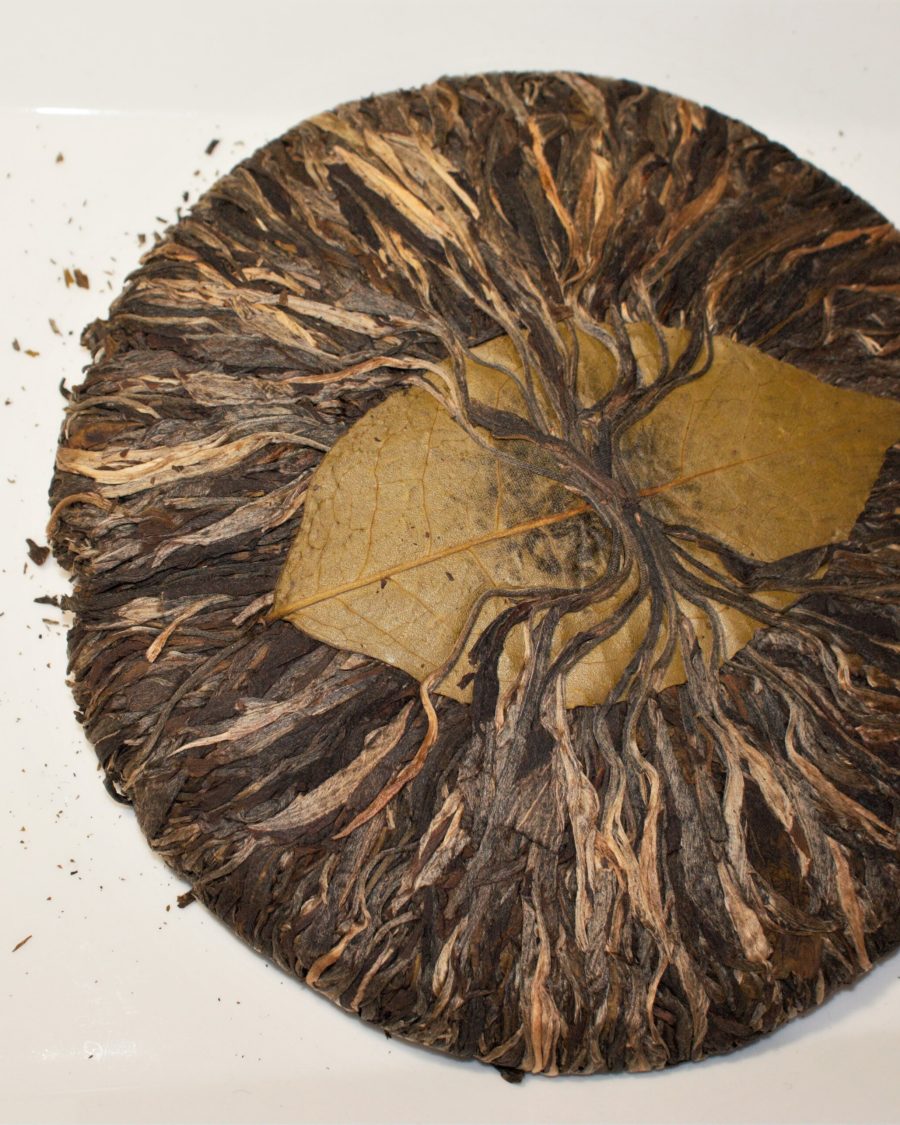
“Raw” (生, sheng) pu-erh doesn’t belong on the same oxidation scale as white-to-black tea at all. The leaf is sun-dried into a semi-processed state called maocha rather than oven- or pan-fired, which leaves its natural enzymes only partly deactivated — unlike green tea’s kill-green step, which deliberately stops enzyme activity outright. Steamed soft and compressed into a cake, that residual enzyme activity, combined with a slow microbial and oxidative process over years of storage, is what lets a raw pu-erh cake’s flavour keep shifting for decades rather than staling the way an ordinary tea would.
Ancient Grove’s large-leaf Yunnan cultivar, grown from trees old enough that some estates market them by trunk age rather than garden name, is the classic base material for this style — young, bright and astringent now; the estate expects the better lots to still be improving in fifteen years.
Sun-dried into maocha rather than oven-fired, then steamed and compressed into a cake and left to age for years rather than sold fresh.