Stonegate Da Hong Pao
A rock oolong’s mineral character is a real effect of the Wuyi cliffs’ weathered soil — the industry calls it 岩韵, “rock rhyme”.
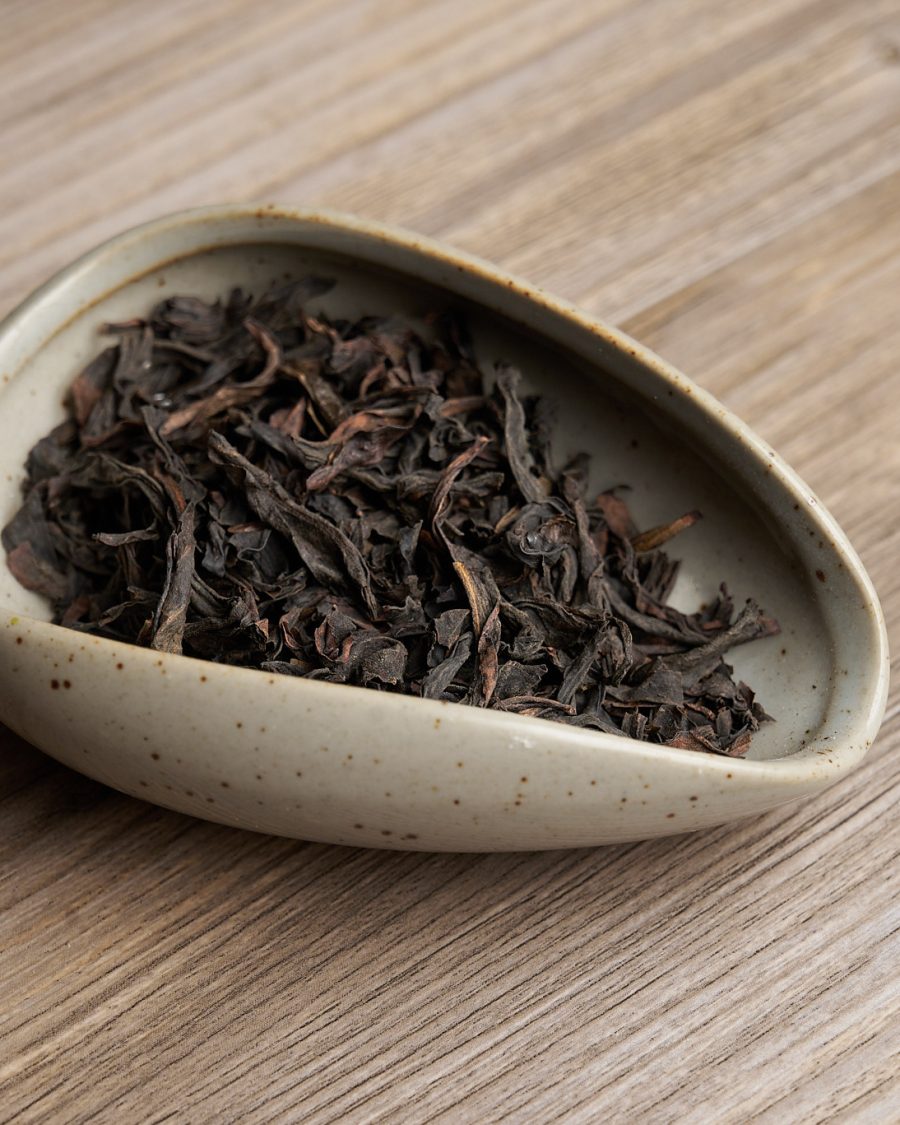
Wuyi “rock” oolongs (岩茶, yancha) are named for the mineral-rich, weathered volcanic soil of the narrow gorges the bushes are grown in, and tea drinkers there genuinely taste the difference as a mineral quality — 岩韵, “rock rhyme” — that the same cultivar grown elsewhere doesn’t produce. Da Hong Pao is the most famous of the Wuyi cultivars, oxidized to roughly the midpoint of the oolong range and then finished with a charcoal roast that pushes the flavour toward dark stone fruit and roasted nuts.
The leaf is only bruised at the edges during processing — tumbled gently rather than rolled hard — so oxidation happens unevenly across each leaf on purpose, which is part of what a well-made rock oolong is actually judged on.
Withered, bruised on bamboo trays to initiate oxidation at the leaf edges only, oxidized to roughly the midpoint, fixed, then charcoal-roasted.